
Khinkali
The history, tradition, and authentic experience behind Georgia’s most iconic street food.
The History of Khinkali
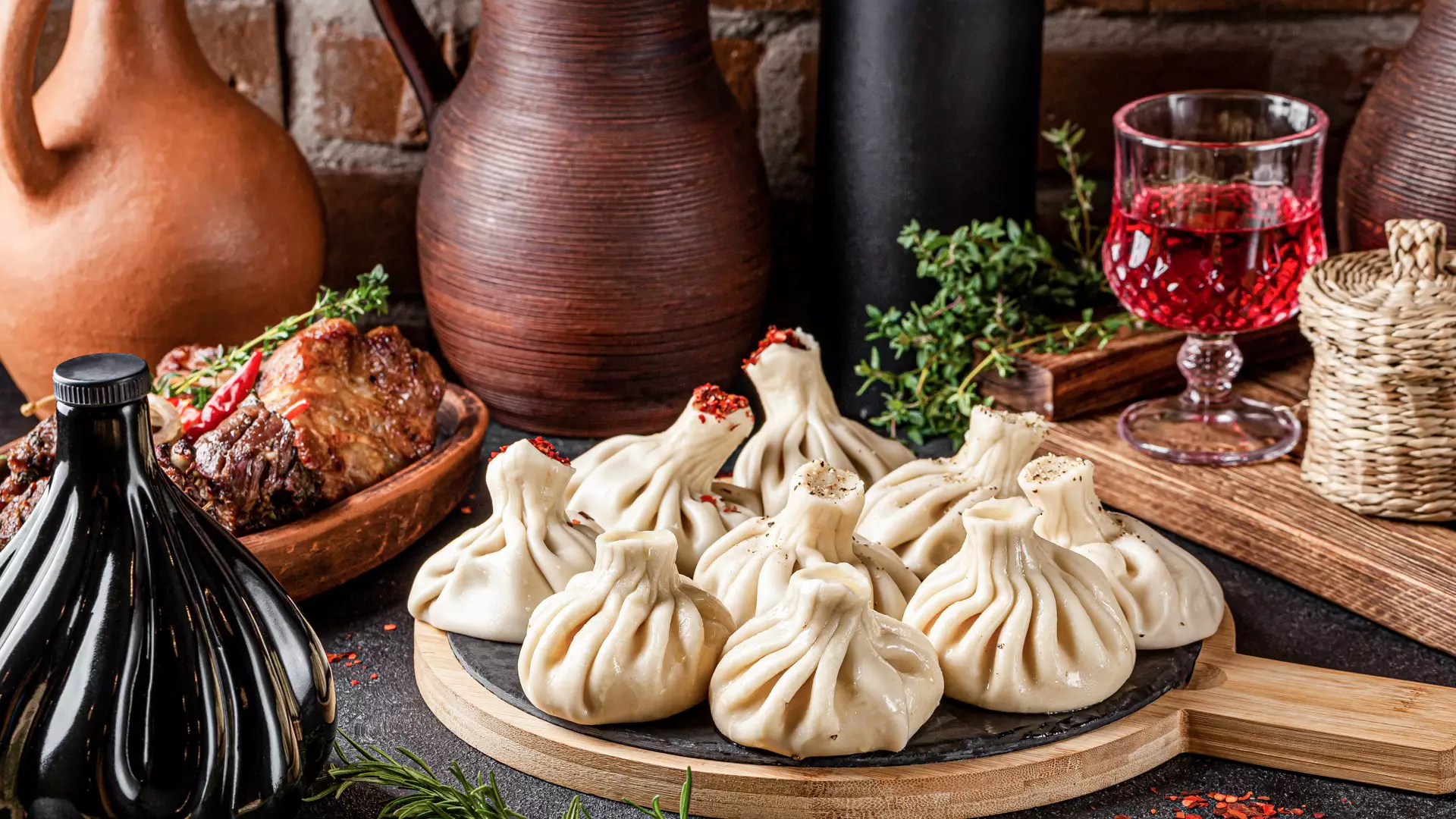
Khinkali is a traditional Georgian dish resembling dumplings filled with meat and spices. Its origins date back centuries, and although its exact history remains uncertain, most historians agree that Khinkali is an inseparable part of Georgian culture, with roots deeply connected to the Caucasus mountains.
The word “Khinkali” comes from the Georgian language and means “pouch” or “bag,” referring to the distinctive shape of the dish. Although considered the heart of Georgian cuisine, variations of Khinkali can also be found across other regions of the Caucasus and Central Asia.
According to historical sources, Khinkali was originally created by nomadic communities seeking an easy and practical way to transport and preserve food during long journeys.
The earliest references to Khinkali date back to ancient times, with many believing that the ancestors of modern Georgians created the dish to meet the needs of agricultural and pastoral societies.
Since the mid-19th century, Khinkali has become one of the most popular dishes in Georgian households, especially during celebrations and large social gatherings.
An interesting aspect of Khinkali’s history is its deep connection to Georgian family and social life. This dish has always been associated with sharing and togetherness.
Especially in mountainous regions of Georgia, Khinkali was part of communal celebrations where friends and relatives gathered around the table to eat, laugh, and enjoy each other's company.
Khinkali’s history is also intertwined with the Georgian philosophy of hospitality. In many parts of Georgia, Khinkali is seen not merely as food but as a symbol of generosity and sharing.
How Khinkali Is Made
Preparing Khinkali is an art passed down through generations. Although there are many regional variations throughout Georgia, the basic recipe remains unchanged and includes only a few high-quality ingredients.
Khinkali dough is simple, made with flour, water, and a little salt. The kneading process requires patience and skill until the dough becomes smooth and elastic.
The most traditional filling includes beef or pork, often mixed with onion and spices such as pepper, garlic, coriander, and thyme.
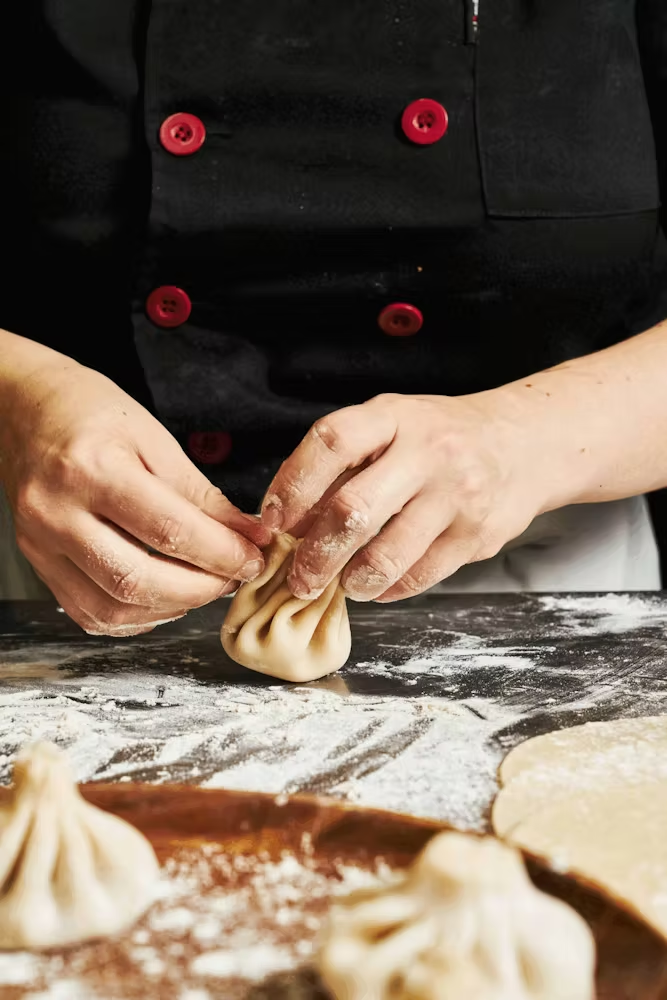
Once the dough is prepared, a spoonful of filling is placed in the center. The dough is then folded around it, forming the iconic pouch shape.
This process requires craftsmanship, as the flavorful juices inside must remain sealed, making Khinkali even more delicious.
Khinkali is boiled in salted water for approximately 10–15 minutes until soft and perfectly textured.
How It Is Eaten & Cultural Significance
Khinkali is traditionally enjoyed in large quantities and is accompanied by special rituals. In Georgia, it is eaten by hand to fully enjoy the rich broth hidden inside.
Before eating, people hold Khinkali by the top knot and take a careful first bite to avoid losing the flavorful juices.
Khinkali is also deeply social food. In Georgian culture, it is almost unthinkable to enjoy it alone, as it is traditionally shared during family gatherings and celebrations.
This culture of togetherness and sharing is deeply rooted in Georgian daily life. Khinkali is not simply food — it is a way of connecting people and creating memories around the same table.